
Copper Investing: Strategic Approaches for Long-Term Growth and Risk Management
You can gain exposure to copper because it plays a central role in electrification, renewable energy, and advanced electronics — forces that can push demand higher over time. If you want a tangible way to participate in long-term industrial growth, copper offers multiple investment paths (physical, futures, ETFs, and mining stocks) each with distinct risk and return profiles.
This article Copper Investing lays out the market drivers and industry fundamentals that move copper prices and explains practical strategies to fit copper into your portfolio. Expect clear comparisons of instruments, key supply-demand risks, and factors to watch so you can choose an approach that matches your time horizon and risk tolerance.
Market Drivers and Industry Fundamentals
Copper’s price and investment appeal hinge on demand from electrification and construction, balanced against concentrated supply and long lead times for new mines. You need to watch technology adoption rates, infrastructure spending, and geopolitical supply risks closely.
Key Factors Affecting Copper Demand
Electric vehicles, renewable energy systems, and grid upgrades drive the largest incremental demand today. An average EV requires roughly 3–4 times more copper than an internal combustion vehicle, and wind turbines, solar farms, and battery storage add substantial copper per MW installed.
Urbanization and data-center buildouts increase copper used in wiring, cabling, and cooling systems. Growth in China, India, and Southeast Asia materially influences global consumption patterns.
Policy incentives and critical-minerals classification can accelerate project pipelines and corporate buying. Monitor subsidy programs, vehicle electrification targets, and utility transmission upgrade plans to anticipate demand shifts.
Supply Constraints and Resource Availability
New copper mine projects typically take 7–15 years from discovery to production, creating a lag between demand signals and supply response. High-grade deposits are increasingly scarce; many new projects target lower grades, raising production costs and environmental challenges.
Operational disruptions—strikes, permitting delays, water restrictions, and power shortages—frequently tighten supply in major producing regions. Recycling and scrap supply help but cover only a portion of total demand, limiting the buffer against a primary supply shortfall.
Capital intensity and ESG requirements raise barriers to entry. You should evaluate project timelines, jurisdiction risk, and projected ore grades when assessing supply-side resilience.
Major Global Producers
A small set of companies and countries dominates mined copper output, affecting market concentration and geopolitical risk. Chile and Peru account for roughly a third of global mined copper; state and private majors like Codelco, BHP, Glencore, and Freeport-McMoRan control the largest single-mine and company exposures.
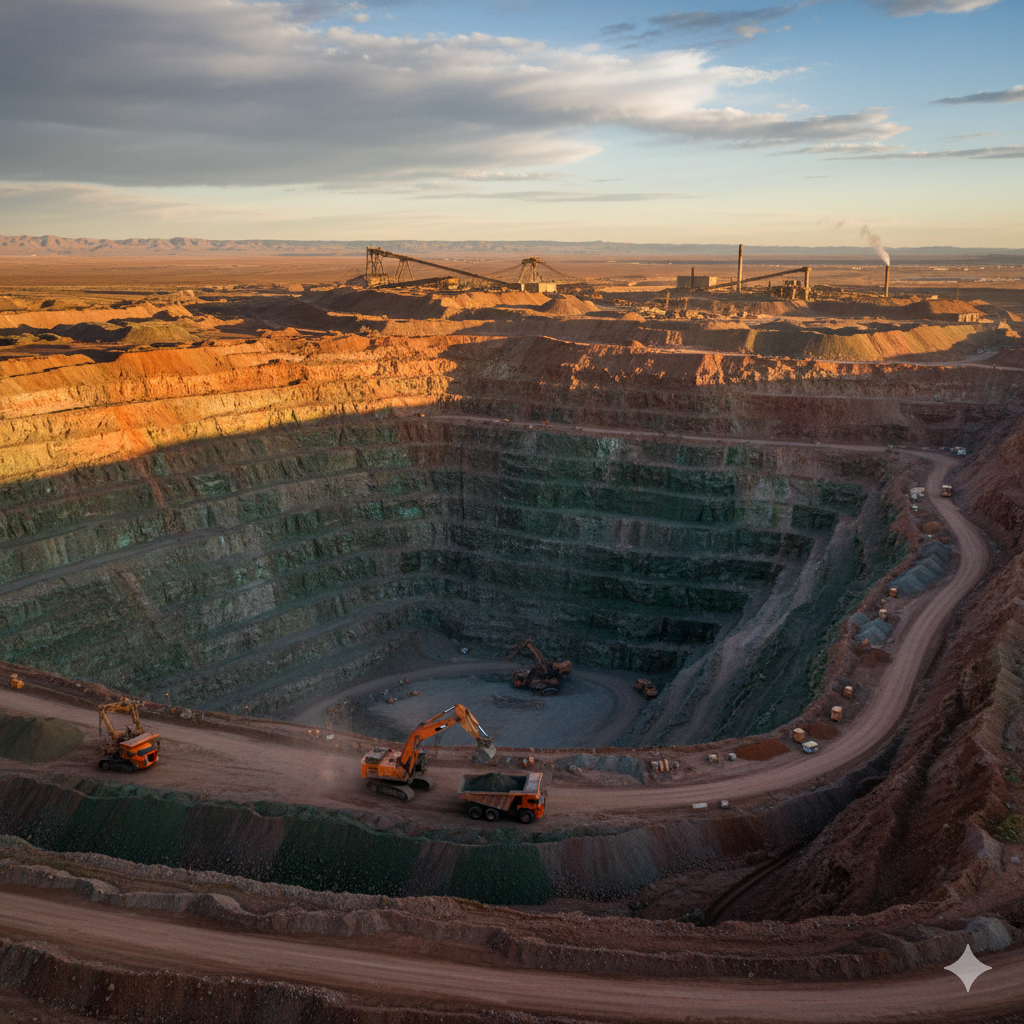
Production profile matters: large open-pit porphyry mines supply steady volumes but face long mine lives and declining grades. Smaller, higher-cost mines and juniors can respond faster but add limited tonnage.
When evaluating investments, compare company-specific metrics—cash costs per payable pound, reserve life (years), and capex commitments—plus country risk indicators such as tax regime stability and permitting timelines.
Investment Strategies and Portfolio Considerations
You should choose an approach that matches your liquidity needs, time horizon, and risk tolerance. Focus on the tradeoffs between physical ownership, equity exposure, and active risk controls.
Direct Ownership of Physical Copper
Holding physical copper gives you direct commodity exposure and removes counterparty risk from stocks or futures. You can buy cathodes, wire, or copper bullion; cathodes and commercial shapes are most liquid for industrial use, while minted rounds are easier for retail storage and resale.
Storage and handling add explicit costs. Expect warehousing, insurance, and transportation expenses that can total 0.5–2% of value annually depending on volume and location. Verify assaying standards and serial numbers if you buy bars.
Price transparency can be lower than for gold or silver. Bid-ask spreads widen for small retail lots, and selling large lots requires pre-arranged buyers or use of commodity brokers. Consider minimum lot sizes and the impact on portfolio liquidity.
Copper Mining Stocks and ETFs
Mining equities and ETFs give you leverage to copper prices plus exposure to operational and jurisdictional risk. Choose between single-company stocks (higher idiosyncratic risk) and diversified ETFs (lower single-name risk, management fees apply).
Evaluate miners on production costs (C1 cash cost), reserve life, jurisdictional risk, and ESG compliance. Look for companies with low all-in sustaining costs (AISC), stable capital expenditure plans, and diversified asset footprints across countries like Chile, Peru, and North America.
For ETFs, compare expense ratios, tracking method (physical vs futures vs equity baskets), and concentration in large caps versus junior developers. Use position sizing limits to prevent a single producer or country from dominating your exposure.
Risks and Volatility Management
Copper prices react to global GDP, construction and electrification demand, and mining supply shocks. Prepare for multi-month swings driven by policy, labor disputes, or mine closures in major producing regions.
Use diversification and hedging to control volatility. Tactics include:
- Allocating a capped percentage of your total portfolio to copper exposure.
- Pairing physical holdings with equity/ETF positions to blend liquidity and cost.
- Using options or futures to hedge short-term downside or lock in price levels for planned purchases.
Stress-test scenarios: model a 20–40% price decline, a prolonged supply shortfall, and a rapid demand surge from electrification projects. Maintain cash buffers to meet margin calls if you use leveraged futures.